
BSV Saaten Seed mixture WaidGreen® Wildlife Plot Stew - Frankonia Wholesale B2B ✓ Germany ✓ International

BSV Saaten Seed mixture WaidGreen® Wildlife Plot Stew, 10 kg
&quality=40)
&quality=40)
&quality=40)
&quality=40)
BSV Saaten Seed mixture WaidGreen® Wildlife Plot Stew, 10 kg
PRODUCT DETAILS
- to improve the living conditions for the game
- ideal for cultivation in the forest, at the edge of the forest and in the field
- also suitable for poor soil conditions
- sowing time - from the end of April to June
- content 10 kg
To improve living conditions for wildlife.
With the WaidGreen® Wildacker stew, a varied and tasty range of grazing options is available. The complex nutrient requirements of game are met in a balanced manner by the entire range of different plant species; the game can choose individually from the richly laid table. At the same time, the Wildacker stew provides sufficient mass and provides nutrition over a grazing period of several months. Tall species also provide good cover. With its many types and varieties, the Wildacker stew is suitable for almost all types of soil and locations for cultivation in the forest, on the edge of the forest and in the field. Even in poor soil conditions or unfavorable weather conditions, the plant population develops adequately.
The small-grained seeds are packaged separately from the coarse-grained ones and should also be sown in two operations.
Composition (% by weight)
- 18% legumes (nitrogen-fixing plants) – Alexandrian clover, fenugreek, sainfoin, Persian clover, red clover
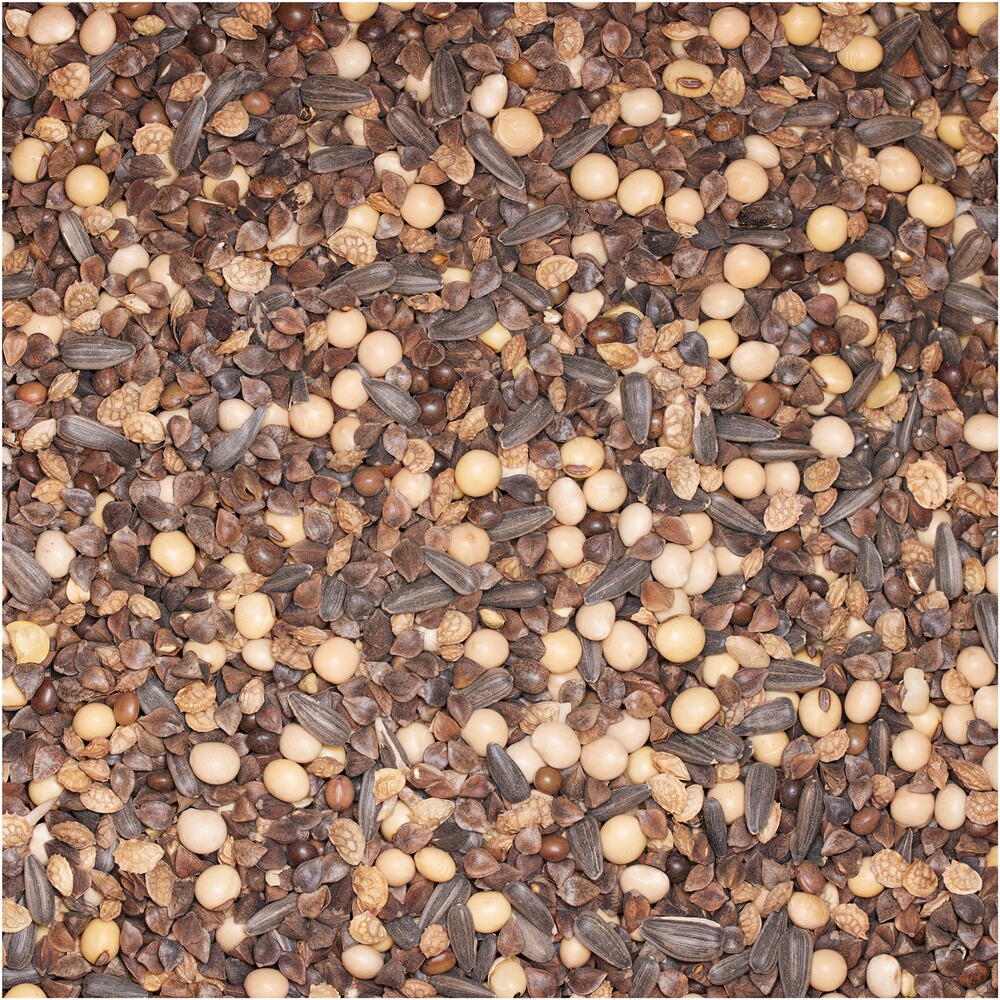
- 32% coarse legumes – forage pea, sweet vetch, soybean, sweet lupine, shaggy vetch
- 6% grasses – Italian ryegrass
- 21% Crucifera – leafy stem cabbage, Markstem cabbage, stubble turnip, winter fodder rape, winter turnip
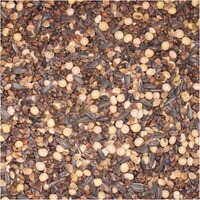
- 23% Other – buckwheat, cultivated mallow, phacelia, sunflower
- Contents: 10 kg
Cultivation instructions
- Sowing time: from the end of April to June; the later the sowing takes place, the more tender and attractive the forage plants are compared to natural forage.
- Seeding rate: 5 kg/1,000 m²
- Sowing: the coarse-grained varieties should be sown about 3–4 cm deep, the fine-grained varieties only 1–2 cm deep.
- Care: The mixture remains in place over winter and can be plowed under in spring. After a previous harvest of the same mixture, it can be sown again without hesitation.
- Fertilization: 30–50 kg/1,000 m² NPK fertilizer (please refer to soil analysis!)
Notice
If certain varieties/species are unavailable, they may be replaced by equivalent ones.
- Tip: Supplement the mixture with 3-4 kg/1,000 m² of spring wheat and oats. It provides excellent, energy-rich forage from the milk stage onwards.